Lesson 03
Can You Trust the Bible?
The Bible makes many promises and offers much advice. Likely you are curious about what it teaches, but perhaps you are also cautious. Should you trust promises and advice from such an old book? Can you really believe what the Bible says about enjoying life now and in the future? Millions of people do. Let us see whether you can too.
1. Is the Bible a book of fact or fiction?
The Bible claims to be a record of “accurate words of truth.”
It relates real events that involved real people.
Read Luke 1.3: I resolved also, because I have traced all things from the start with accuracy, to write them to you in logical order, most excellent Theophilus,
Read Luke 3.1, 2: In the 15th year of the reign of Tiberius Caesar, when Pontius Pilate was governor of Judea, Herod was district ruler of Galilee, Philip his brother was district ruler of the country of Ituraea and Trachonitis, and Lysanias was district ruler of Abilene, in the days of chief priest Annas and of Caiaphas, God’s declaration came to John the son of Zechariah in the wilderness.
Many historians and archaeologists have confirmed the accuracy of important dates, people, places, and events described in the Bible.
2. Why can we say that the Bible is not out-of-date?
In many ways, the Bible has proved to be ahead of its time. For example, it touches on scientific subjects. Much of what it says on those subjects was controversial when it was written. However, modern science confirms that what the Bible says is accurate. It is “always reliable, now and forever.”
3. Why can we trust what the Bible says about the future?
The Bible contains prophecies that foretell “the things that have not yet been done.”
It accurately foretold numerous historical events long before they occurred. It also described today’s world conditions in striking detail. In this lesson, we will examine some of the Bible’s prophecies. Their accuracy is amazing!
DIG DEEPER
Examine how modern science agrees with the Bible, and investigate a few impressive Bible prophecies.
4. Science agrees with the Bible
In ancient times, most people believed that the earth rested upon something. Play the VIDEO.
AD))) Video Title: The Earth Hangs Upon Nothing (with Audio Description and Transcript) (Duration: 1:14).
Notice what was recorded in the book of Job some 3,500 years ago.
Read Job 26.7: He stretches out the northern sky over empty space, Suspending the earth upon nothing;
Discuss this question:
Why is the statement that the earth is suspended “upon nothing” surprising?
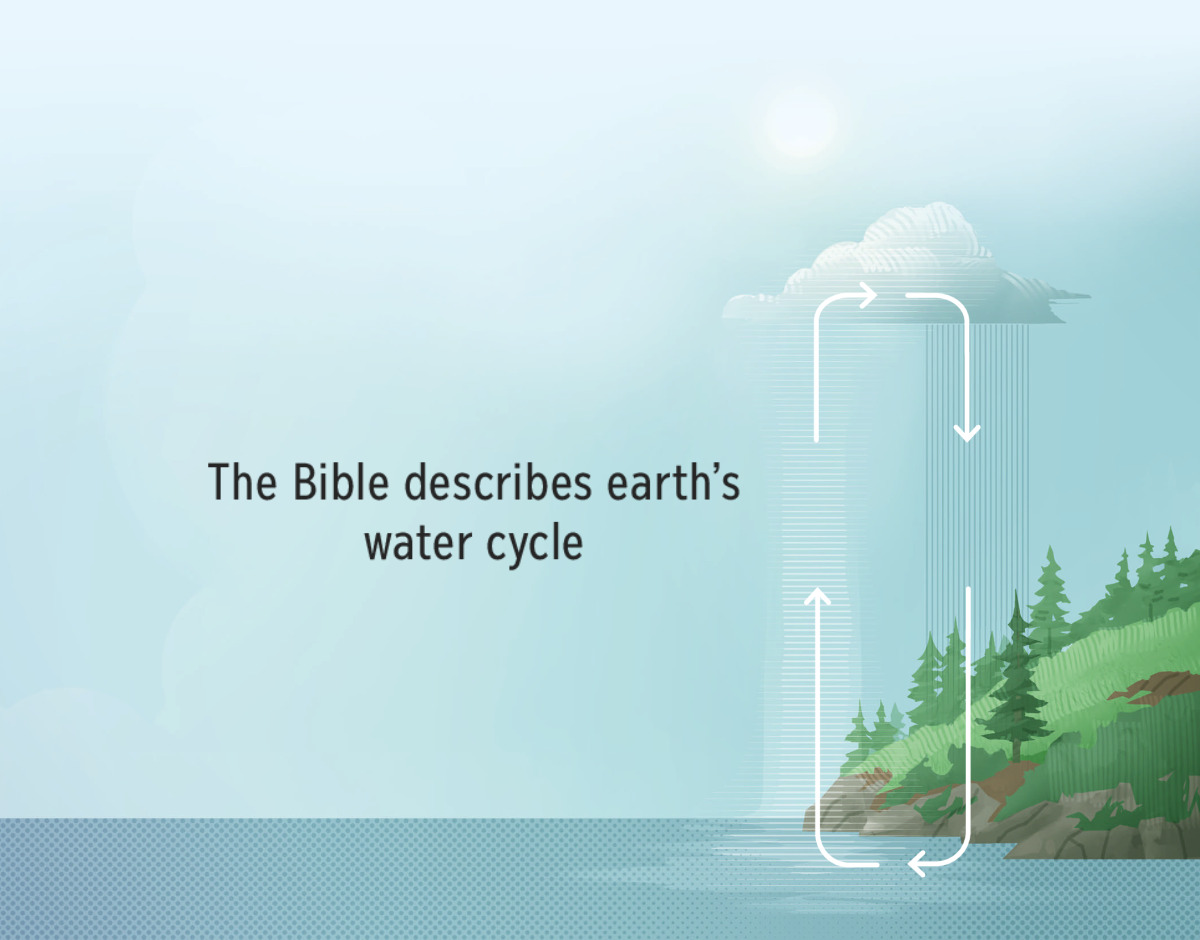
It was not until the 1800’s that the earth’s water cycle was well understood. Yet, notice what the Bible stated thousands of years ago.
Read Job 36.27, 28: He draws up the drops of water; They condense into rain from his mist; Then the clouds pour it down; They shower down upon mankind.
Discuss these questions:
Why is this simple description of the water cycle remarkable?
Do the scriptures you just read strengthen your trust in the Bible?
5. The Bible foretold important events
Read Isaiah 44:27-45:2: The One saying to the deep waters, ‘Be evaporated, And I will dry up all your rivers’; The One saying of Cyrus, ‘He is my shepherd, And he will completely carry out all my will’; The One saying of Jerusalem, ‘She will be rebuilt,’ And of the temple, ‘Your foundation will be laid.’” This is what Jehovah says to his anointed one, to Cyrus, Whose right hand I have taken hold of To subdue nations before him, To disarm kings, To open before him the double doors, So that the gates will not be shut: “Before you I will go, And the hills I will level. The copper doors I will break in pieces, And the iron bars I will cut down.
Discuss this question:
What details did the Bible foretell 200 years before the fall of Babylon?
Play the VIDEO.
AD))) Video Title: The Bible Foretold the Fall of Babylon (with Audio Description and Transcript) (Duration: 0:58).
History confirms that King Cyrus of Persia and his army conquered the city of Babylon in 539 B.C.E.
[Footnote] B.C.E. means “Before the Common Era,” and C.E. means “Common Era.” [End of footnote]
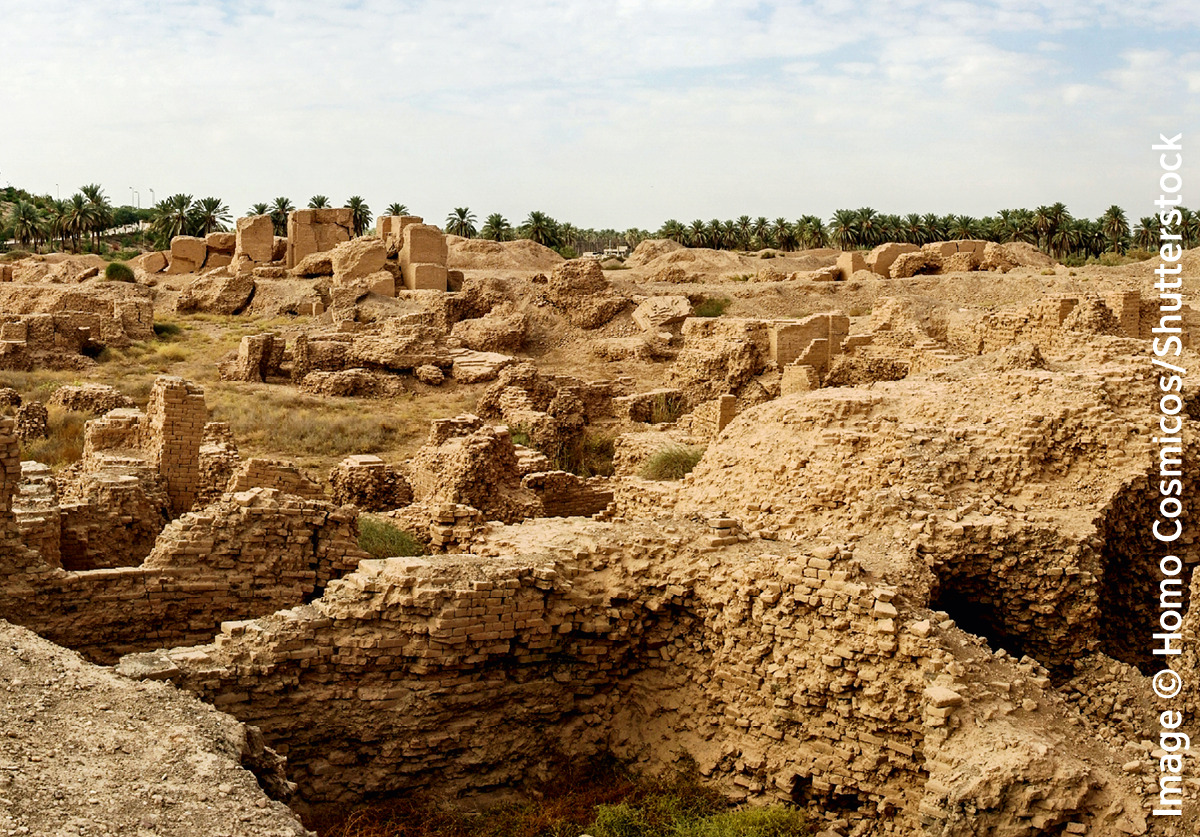
They diverted the river that protected the city. After entering the city through gates that had been left open, they captured it without a battle. Today, over 2,500 years later, Babylon lies in ruins. Note what the Bible foretold.
Read Isaiah 13.19, 20: And Babylon, the most glorious of kingdoms, The beauty and the pride of the Chaldeans, Will be like Sodom and Gomorrah when God overthrew them. She will never be inhabited, Nor will she be a place to reside in throughout all generations. No Arab will pitch his tent there, And no shepherds will rest their flocks there.
Discuss this question:
How does what happened to Babylon confirm the fulfillment of this prophecy?
6. The Bible foretold things we see today
The Bible refers to our time as “the last days.”
Notice what the Bible foretold about this time period.
Read Matthew 24.6, 7: You are going to hear of wars and reports of wars. See that you are not alarmed, for these things must take place, but the end is not yet. “For nation will rise against nation and kingdom against kingdom, and there will be food shortages and earthquakes in one place after another.
Discuss this question:
What significant conditions did the Bible say would exist during the last days?
Read 2 Timothy 3.1-5: But know this, that in the last days critical times hard to deal with will be here. For men will be lovers of themselves, lovers of money, boastful, haughty, blasphemers, disobedient to parents, unthankful, disloyal, having no natural affection, not open to any agreement, slanderers, without self-control, fierce, without love of goodness, betrayers, headstrong, puffed up with pride, lovers of pleasures rather than lovers of God, having an appearance of godliness but proving false to its power; and from these turn away.
Discuss these questions:
What common attitudes of people during the last days did the Bible describe?
Which of these attitudes have you observed?

SOME PEOPLE SAY: “The Bible is a book of myths and legends.”
In your opinion, what is the strongest evidence that the Bible is trustworthy?
SUMMARY
History, science, and prophecy all indicate that you can trust the Bible.
Review
Is the Bible a book of fact or fiction?
What are some areas where science agrees with the Bible?
Do you think that the Bible foretells the future? Why, or why not?
Lesson completed on:
Goal
To strengthen your trust in the Bible, read or watch one of the items in the Explore section.
Other: Memorizing Bible scriptures is vital for blind individuals to defend the truth using the Bible, build faith, provide comfort during difficult times, and keep God’s principles firm in heart and mind.
From lesson 3, memorize 2 Timothy 3:1-5: But know this, that in the last days critical times hard to deal with will be here. For men will be lovers of themselves, lovers of money, boastful, haughty, blasphemers, disobedient to parents, unthankful, disloyal, having no natural affection, not open to any agreement, slanderers, without self-control, fierce, without love of goodness, betrayers, headstrong, puffed up with pride, lovers of pleasures rather than lovers of God, having an appearance of godliness but proving false to its power; and from these turn away.
Build a Bible mind map to locate scriptures, memorize: First Samuel, Second Samuel, First Kings, Second Kings, First Chronicles, Second Chronicles.
EXPLORE
1. Are there scientific errors in the Bible?
“Does Science Agree With the Bible?” (Web article) Open explore 1 in new page
2. What are the facts about “the last days”?
“6 Bible Prophecies You Are Seeing Fulfilled” (The Watchtower, May 1, 2011) Open explore 2 in new page
3. Learn how Bible prophecies about the Greek Empire came true.
Fortified by “the Prophetic Word” (5:22) Open explore 3 in new page
4. Discover how Bible prophecies changed one man’s view of the Bible.
“For Me, God Did Not Exist” (The Watchtower No. 5 2017) Open explore 4 in new page
[End of lesson 3.]