Lesson 17 Explore 2: Why Pray in Jesus’ Name?

JESUS often taught about prayer. In his day, Jewish religious leaders prayed “on the corners of the broad ways.” Why? “To be visible to men.” Obviously, they wanted to be admired for their piety. Many uttered long, repetitive invocations, as though the “use of many words” was necessary for a prayer to be heard.
(Matthew 6.5-8: “Also, when you pray, do not act like the hypocrites, for they like to pray standing in the synagogues and on the corners of the main streets to be seen by men. Truly I say to you, they have their reward in full. But when you pray, go into your private room and, after shutting your door, pray to your Father who is in secret. Then your Father who looks on in secret will repay you. When praying, do not say the same things over and over again as the people of the nations do, for they imagine they will get a hearing for their use of many words. So do not be like them, for your Father knows what you need even before you ask him.)
Jesus exposed such practices as futile, thus helping sincere individuals to know what to avoid when praying. However, he did more than teach how not to pray.
Jesus taught that our prayers should express our desire to see God’s name sanctified, His Kingdom come, and His will be done. Jesus also taught that it is appropriate to ask God to help us with personal matters.
(Matthew 6.9-13: “You must pray, then, this way: “‘Our Father in the heavens, let your name be sanctified. Let your Kingdom come. Let your will take place, as in heaven, also on earth. Give us today our bread for this day; and forgive us our debts, as we also have forgiven our debtors. And do not bring us into temptation, but deliver us from the wicked one.’)
(Luke 11.2-4: So he said to them: “Whenever you pray, say: ‘Father, let your name be sanctified. Let your Kingdom come. Give us each day our bread according to our daily needs. And forgive us our sins, for we ourselves also forgive everyone who is in debt to us; and do not bring us into temptation.’”)
Using illustrations, Jesus showed that we need persistence, faith, and humility if our prayers are to be heard.
(Luke 11.5-13: Then he said to them: “Suppose one of you has a friend and you go to him at midnight and say to him, ‘Friend, lend me three loaves, because one of my friends has just come to me on a journey and I have nothing to offer him.’ But that one replies from inside: ‘Stop bothering me. The door is already locked, and my young children are with me in bed. I cannot get up and give you anything.’ I tell you, even if he will not get up and give him anything because of being his friend, certainly because of his bold persistence he will get up and give him whatever he needs. So I say to you, keep on asking, and it will be given you; keep on seeking, and you will find; keep on knocking, and it will be opened to you. For everyone asking receives, and everyone seeking finds, and to everyone knocking, it will be opened. Indeed, which father among you, if his son asks for a fish, will hand him a serpent instead of a fish? Or if he also asks for an egg, will hand him a scorpion? Therefore, if you, although being wicked, know how to give good gifts to your children, how much more so will the Father in heaven give holy spirit to those asking him!”)
(Luke 18.1-14: Then he went on to tell them an illustration about the need for them always to pray and not to give up, saying: “In a certain city there was a judge who had no fear of God and no respect for man. There was also a widow in that city who kept going to him and saying, ‘See that I get justice from my legal opponent.’ Well, for a while he was unwilling, but afterward he said to himself, ‘Although I do not fear God or respect any man, because this widow keeps making me trouble, I will see that she gets justice so that she will not keep coming and wearing me out with her demand.’” Then the Lord said: “Hear what the judge, although unrighteous, said! Certainly, then, will not God cause justice to be done for his chosen ones who cry out to him day and night, while he is patient toward them? I tell you, he will cause justice to be done to them speedily. Nevertheless, when the Son of man arrives, will he really find this faith on the earth?” He also told this illustration to some who trusted in their own righteousness and who considered others as nothing: “Two men went up into the temple to pray, the one a Pharisee and the other a tax collector. The Pharisee stood and began to pray these things to himself, ‘O God, I thank you that I am not like everyone else—extortioners, unrighteous, adulterers—or even like this tax collector. I fast twice a week; I give the tenth of all things I acquire.’ But the tax collector, standing at a distance, was not willing even to raise his eyes heavenward but kept beating his chest, saying, ‘O God, be gracious to me, a sinner.’ I tell you, this man went down to his home and was proved more righteous than that Pharisee. Because everyone who exalts himself will be humiliated, but whoever humbles himself will be exalted.”)
And he reinforced his teaching through his own example.-
(Matthew 14.23: After sending the crowds away, he went up on the mountain by himself to pray. When evening came, he was there alone.)
(Mark 1.35: Early in the morning, while it was still dark, he got up and went outside and left for an isolated place, and there he began praying.)
This instruction no doubt helped Jesus’ disciples to improve their prayers. Yet, Jesus waited until his last night on earth to provide his disciples with the most significant lesson on prayer.

“The Turning-Point in the History of Prayer”
Jesus spent most of his final night giving encouragement to his faithful apostles. It was the appropriate time to reveal something new. “I am the way and the truth and the life,” Jesus said. “No one comes to the Father except through me.” Later he gave them the reassuring promise: “Whatever it is that you ask in my name, I will do this, in order that the Father may be glorified in connection with the Son. If you ask anything in my name, I will do it.” Toward the end of his discussion, he said: “Until this present time you have not asked a single thing in my name. Ask and you will receive, that your joy may be made full.”-
(John 14.6: Jesus said to him: “I am the way and the truth and the life. No one comes to the Father except through me.)
(John 14.13, 14: Also, whatever you ask in my name, I will do this, so that the Father may be glorified in connection with the Son. If you ask anything in my name, I will do it.)
(John 16.24: Until now you have not asked for a single thing in my name. Ask and you will receive, so that your joy may be complete.)
These words were striking. One reference work describes this as “the turning-point in the history of prayer.” Jesus did not intend that prayer should be diverted from God to him. Instead, he was opening up a new way of access to Jehovah God.
Granted, God has always listened to the prayers of his faithful servants.
(1 Samuel 1.9-19: Then Hannah got up after they had finished eating and drinking in Shiloh. At the time, Eli the priest was sitting on the seat by the doorpost of the temple of Jehovah. Hannah was extremely bitter, and she began to pray to Jehovah and to weep uncontrollably. And she made this vow: “O Jehovah of armies, if you look upon the affliction of your servant and remember me and you do not forget your servant and give to your servant a male child, I will give him to Jehovah all the days of his life, and no razor will touch his head.” While she prayed for a long time before Jehovah, Eli was watching her mouth. Hannah was speaking in her heart, only her lips were trembling, but her voice was not heard. So Eli thought she was drunk. Eli said to her: “How long will you stay drunk? Stop drinking your wine.” At this Hannah answered: “No, my lord! I am a woman under great stress; I have not drunk wine or anything alcoholic, but I am pouring out my soul before Jehovah. Do not take your servant for a worthless woman, for I have been speaking until now out of my great anguish and distress.” Then Eli answered: “Go in peace, and may the God of Israel grant your petition that you have asked of him.” To this she said: “Let your servant find favor in your eyes.” And the woman went on her way and ate, and her face was no longer downcast. Then they got up early in the morning and bowed before Jehovah, after which they returned to their house in Ramah. Elkanah had sexual relations with his wife Hannah, and Jehovah gave attention to her.)
(Psalm 65.2: O Hearer of prayer, to you people of all sorts will come.)
However, from the time Israel became God’s covenant people, those who wanted their prayers to be heard had to acknowledge that Israel was God’s chosen nation. And later, from the time of Solomon, they had to recognize the temple as God’s chosen place for sacrifice.
(Deuteronomy 9.29: For they are your people and your personal possession, whom you brought out with your great power and your outstretched arm.’)
(2 Chronicles 6.32, 33: “Also concerning the foreigner who is not part of your people Israel and who comes from a distant land because of your great name and your mighty hand and your outstretched arm, and he comes and prays toward this house, may you then listen from the heavens, your dwelling place, and do all that the foreigner asks of you, so that all the peoples of the earth may know your name and fear you, as your people Israel do, and may know that your name has been called on this house that I have built.)
Yet, this system of worship was only temporary. As the apostle Paul wrote, the Law given to Israel and the sacrifices offered at the temple were “a shadow of the good things to come, but not the very substance of the things.”
(Hebrews 10.1, 2: For since the Law has a shadow of the good things to come, but not the very substance of the things, it can never, by the same sacrifices that are continually offered year after year, make those who approach perfect. Otherwise, would not the sacrifices have stopped being offered, because those rendering sacred service once cleansed would have no consciousness of sins anymore?)
The shadow had to give way to the reality.
(Colossians 2.17: Those things are a shadow of the things to come, but the reality belongs to the Christ.)
Since 33 C.E., an individual’s relationship with Jehovah no longer depends on adherence to the Mosaic Law. Instead, it is founded on obedience to the one to whom the Law pointed-Christ Jesus.-
(John 15.14-16: You are my friends if you do what I am commanding you. I no longer call you slaves, because a slave does not know what his master does. But I have called you friends, because I have made known to you all the things I have heard from my Father. You did not choose me, but I chose you, and I appointed you to go and keep bearing fruit and that your fruit should remain, so that no matter what you ask the Father in my name, he may give it to you.)
(Galatians 3.24, 25: So the Law became our guardian leading to Christ, so that we might be declared righteous through faith. But now that the faith has arrived, we are no longer under a guardian.)
A Name “Above Every Other Name”
Jesus introduced a superior basis for approach to Jehovah, identifying himself as a powerful friend, one who opens the way for our prayers to be heard and answered by God. What enables Jesus to act this way in our behalf?
Since we are all born in sin, no works we perform or sacrifices we offer can cleanse us of this stain or earn us the right to have a relationship with our holy God, Jehovah.
(Romans 3.20: Therefore, no one will be declared righteous before him by works of law, for by law comes the accurate knowledge of sin.)
(Romans 3.24: and it is as a free gift that they are being declared righteous by his undeserved kindness through the release by the ransom paid by Christ Jesus.)
(Hebrews 1.3, 4: He is the reflection of God’s glory and the exact representation of his very being, and he sustains all things by the word of his power. And after he had made a purification for our sins, he sat down at the right hand of the Majesty on high. So he has become better than the angels to the extent that he has inherited a name more excellent than theirs.)
However, Jesus offered up his perfect human life and paid for the sins of redeemable mankind.
(Romans 5.12: That is why, just as through one man sin entered into the world and death through sin, and so death spread to all men because they had all sinned—.)
(Romans 5.18, 19: So, then, as through one trespass the result to men of all sorts was condemnation, so too through one act of justification the result to men of all sorts is their being declared righteous for life. For just as through the disobedience of the one man many were made sinners, so also through the obedience of the one person many will be made righteous.)
Now all who want to do so have the opportunity to achieve a clean standing before Jehovah and to enjoy “freeness of speech” toward God-but only if they exercise faith in Jesus’ sacrifice and pray in his name.-
(Ephesians 3.11, 12: This is according to the eternal purpose that he formed in connection with the Christ, Jesus our Lord, by means of whom we have this freeness of speech and free access with confidence through our faith in him.)
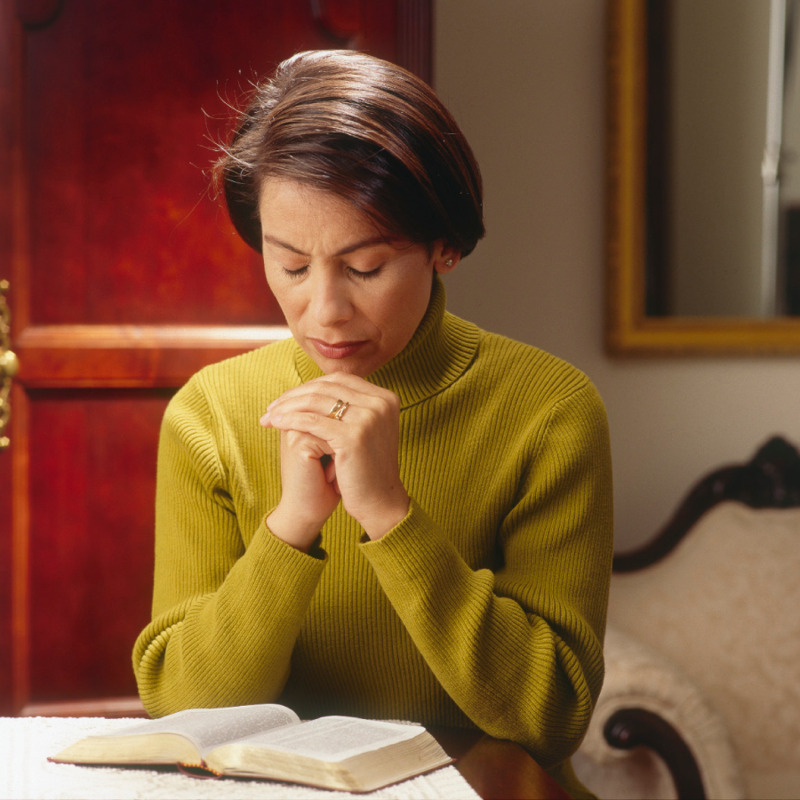
When we pray in Jesus’ name, we are expressing faith in at least three facets of his role in the outworking of God’s purpose:
(1) He is “the Lamb of God,” whose sacrifice provides the basis for forgiveness of sin. (2) He was resurrected by Jehovah and now acts as “high priest” in administering the benefits of the ransom. (3) He alone is “the way” of approach to Jehovah in prayer.-
(John 1.29: The next day he saw Jesus coming toward him, and he said: “See, the Lamb of God who takes away the sin of the world!)
(John 14.6: Jesus said to him: “I am the way and the truth and the life. No one comes to the Father except through me.)
(Hebrews 4.14, 15: Therefore, since we have a great high priest who has passed through the heavens, Jesus the Son of God, let us hold on to our public declaration of him. For we do not have a high priest who cannot sympathize with our weaknesses, but we have one who has been tested in all respects as we have, but without sin.)
Praying in Jesus’ name honors Jesus. Such honor is appropriate, for Jehovah’s will is that “in the name of Jesus every knee should bend..., and every tongue should openly acknowledge that Jesus Christ is Lord to the glory of God the Father.”
(Philippians 2.10, 11: so that in the name of Jesus every knee should bend—of those in heaven and those on earth and those under the ground— and every tongue should openly acknowledge that Jesus Christ is Lord to the glory of God the Father.)
More important, though, praying in Jesus’ name glorifies Jehovah, the one who gave his Son for our benefit.-
(John 3.16: “For God loved the world so much that he gave his only-begotten Son, so that everyone exercising faith in him might not be destroyed but have everlasting life.)
We should pray with our “whole heart,” not in a mechanical manner
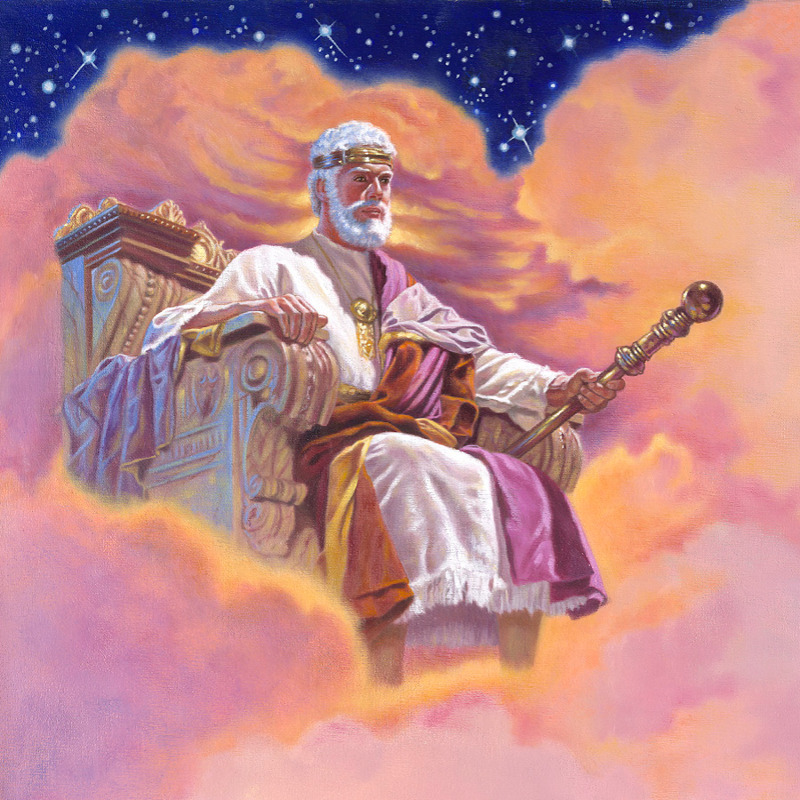
So that we can grasp the magnitude of Jesus’ position, the Bible uses various titles and names to describe him. These help us comprehend the many benefits that flow to us based on what Jesus has done, is doing, and will yet do in our behalf. (See the box “ Jesus’ Vital Role”.) Indeed, Jesus has been given “the name that is above every other name.” All authority in heaven and on earth has been given to him.-
(Philippians 2.9: For this very reason, God exalted him to a superior position and kindly gave him the name that is above every other name,)
(Matthew 28.18: Jesus approached and spoke to them, saying: “All authority has been given me in heaven and on the earth.)
More Than Just a Habit
Yes, we must offer our prayers in Jesus’ name if we want them to be heard by Jehovah.
(John 14.13, 14: Also, whatever you ask in my name, I will do this, so that the Father may be glorified in connection with the Son. If you ask anything in my name, I will do it.)
But we never want to repeat the phrase “in Jesus’ name” purely out of habit. Why not?
Consider an illustration. When you receive a letter from a businessman, it may conclude with a perfunctory “sincerely yours.” Do you feel that this is a genuine expression of the businessman’s feelings, or is he just conforming to a standard of letter-writing etiquette? Really, the use of Jesus’ name in our prayers needs to be more meaningful than the complimentary closing of a business letter. Though we are to “pray incessantly,” we are to do so with our “whole heart,” not in a mechanical manner.-
(1 Thessalonians 5.17: Pray constantly.)
(Psalm 119.145: I call with my whole heart. Answer me, O Jehovah. Your regulations I will observe.)
How can you avoid using the phrase “in Jesus’ name” as a mere token expression? Why not meditate on the heartwarming qualities of Jesus? Think about what he has already done and is willing to do for you. In prayer, thank Jehovah and praise him for the wonderful way he has used his Son. As you do, you will become more confident of Jesus’ promise: “If you ask the Father for anything he will give it to you in my name.”-
(John 16.23: In that day you will ask me no question at all. Most truly I say to you, if you ask the Father for anything, he will give it to you in my name.)
JESUS’ VITAL ROLE
To grasp fully Jesus’ role, consider some of the titles, descriptions, and names applied to him.
• Amen.-
(2 Corinthians 1.19, 20: For the Son of God, Jesus Christ, who was preached among you through us, that is, through me and Silvanus and Timothy, did not become “yes” and yet “no,” but “yes” has become “yes” in his case. For no matter how many the promises of God are, they have become “yes” by means of him. Therefore, also through him is the “Amen” said to God, which brings him glory through us.)
(Revelation 3.14: “To the angel of the congregation in Laodicea write: These are the things that the Amen says, the faithful and true witness, the beginning of the creation by God:)
• Apostle.-
(Hebrews 3.1: Consequently, holy brothers, partakers of the heavenly calling, consider the apostle and high priest whom we acknowledge—Jesus.)
• Chief Agent of Life.-
(Acts 3.15: whereas you killed the Chief Agent of life. But God raised him up from the dead, of which fact we are witnesses.)
• Christ/Messiah.-
(Matthew 16.16: Simon Peter answered: “You are the Christ, the Son of the living God.”)
(John 1.41: He first found his own brother Simon and said to him: “We have found the Messiah” (which means, when translated, “Christ”),)
• Eternal Father.-
(Isaiah 9.6: For a child has been born to us, A son has been given to us; And the rulership will rest on his shoulder. His name will be called Wonderful Counselor, Mighty God, Eternal Father, Prince of Peace.)
• Faithful Witness.-
(Revelation 1.5: and from Jesus Christ, “the Faithful Witness,” “the firstborn from the dead,” and “the Ruler of the kings of the earth.” To him who loves us and who set us free from our sins by means of his own blood—)
• Fine Shepherd.-
(John 10.11: I am the fine shepherd; the fine shepherd surrenders his life in behalf of the sheep.)
• Head of the Congregation.-
(Ephesians 5.23: because a husband is head of his wife just as the Christ is head of the congregation, he being a savior of this body.)
• High Priest.-
(Hebrews 4.14, 15: Therefore, since we have a great high priest who has passed through the heavens, Jesus the Son of God, let us hold on to our public declaration of him. For we do not have a high priest who cannot sympathize with our weaknesses, but we have one who has been tested in all respects as we have, but without sin.)
• Immanuel.-
(Matthew 1.23: “Look! The virgin will become pregnant and will give birth to a son, and they will name him Immanuel,” which means, when translated, “With Us Is God.”)
• Judge.-
(Acts 10.42: Also, he ordered us to preach to the people and to give a thorough witness that this is the one decreed by God to be judge of the living and the dead.)
• King.-
(Revelation 11.15: The seventh angel blew his trumpet. And there were loud voices in heaven, saying: “The kingdom of the world has become the Kingdom of our Lord and of his Christ, and he will rule as king forever and ever.”)
• Lamb of God.-
(John 1.29: The next day he saw Jesus coming toward him, and he said: “See, the Lamb of God who takes away the sin of the world!)
• Last Adam.-
(1 Corinthians 15.45: So it is written: “The first man Adam became a living person.” The last Adam became a life-giving spirit.)
• Leader.-
(Matthew 23.10: Neither be called leaders, for your Leader is one, the Christ.)
• Lord.-
(John 13.13: You address me as ‘Teacher’ and ‘Lord,’ and you are correct, for I am such.)
• Mediator.-
(1 Timothy 2.5: For there is one God, and one mediator between God and men, a man, Christ Jesus,)
• Michael the Archangel.-
(1 Thessalonians 4.16: because the Lord himself will descend from heaven with a commanding call, with an archangel’s voice and with God’s trumpet, and those who are dead in union with Christ will rise first.)
(Jude 9: But when Michael the archangel had a difference with the Devil and was disputing about Moses’ body, he did not dare to bring a judgment against him in abusive terms, but said: “May Jehovah rebuke you.”)
• Mighty God.-
(Isaiah 9.6: For a child has been born to us, A son has been given to us; And the rulership will rest on his shoulder. His name will be called Wonderful Counselor, Mighty God, Eternal Father, Prince of Peace.)
• Prince of Peace.-
(Isaiah 9.6: For a child has been born to us, A son has been given to us; And the rulership will rest on his shoulder. His name will be called Wonderful Counselor, Mighty God, Eternal Father, Prince of Peace.)
• Savior.-
(Luke 2.11: For today there was born to you in David’s city a savior, who is Christ the Lord.)
• Son of God.-
(John 1.34: And I have seen it, and I have given witness that this one is the Son of God.”)
• Son of Man.-
(Matthew 8.20: But Jesus said to him: “Foxes have dens and birds of heaven have nests, but the Son of man has nowhere to lay down his head.”)
• Teacher.-
(John 13.13: You address me as ‘Teacher’ and ‘Lord,’ and you are correct, for I am such.)
• The Word.-
(John 1.1: In the beginning was the Word, and the Word was with God, and the Word was a god.)
• Wonderful Counselor.-
(Isaiah 9.6: For a child has been born to us, A son has been given to us; And the rulership will rest on his shoulder. His name will be called Wonderful Counselor, Mighty God, Eternal Father, Prince of Peace.)
[End of article.]