Lesson 23 Explore 2: Love and Appreciation for Jehovah Lead to Baptism | Watchtower Study
STUDY ARTICLE 10
Love and Appreciation for Jehovah Lead to Baptism
“What prevents me from getting baptized?”-
(Acts 8.36: Now as they were going along the road, they came to a body of water, and the eunuch said: “Look! Here is water; what prevents me from getting baptized?”)
SONG 37 Serving Jehovah Whole-Souled
PREVIEW
1-2. As indicated at Acts 8:27-31, 35-38, what motivated the Ethiopian eunuch to get baptized?
DO YOU want to get baptized as a disciple of Christ? Love and appreciation have motivated many to make that choice. Consider the example of an official who served the queen of Ethiopia.
2. The Ethiopian acted immediately on what he had learned from the Scriptures.
Read Acts 8.27-31: With that he got up and went, and look! an Ethiopian eunuch, a man who had authority under Candace, queen of the Ethiopians, and who was in charge of all her treasure. He had gone to Jerusalem to worship, and he was returning and was sitting in his chariot, reading aloud the prophet Isaiah. So the spirit said to Philip: “Go over and approach this chariot.” Philip ran alongside and heard him reading aloud Isaiah the prophet, and he said: “Do you actually know what you are reading?” He said: “Really, how could I ever do so unless someone guided me?” So he urged Philip to get on and sit down with him.
Read Acts 8.35-38: Philip began to speak, and starting with this scripture, he declared to him the good news about Jesus. Now as they were going along the road, they came to a body of water, and the eunuch said: “Look! Here is water; what prevents me from getting baptized?” —— With that he commanded the chariot to halt, and both Philip and the eunuch went down into the water, and he baptized him.
What motivated him? He obviously appreciated God’s Word; he was reading a passage from the book of Isaiah as he rode in a chariot. And when Philip spoke with him, the man developed an appreciation for what Jesus had done for him. But why had the official traveled to Jerusalem? Because he had already developed a love for Jehovah. How do we know? He had just been worshipping Jehovah in Jerusalem. This man had apparently left the religion of his birth and had joined the only nation that was dedicated to the true God. It was this same love for Jehovah that motivated him to take yet another vital step, that of getting baptized and becoming a disciple of Christ.-
(Matthew 28.19: Go, therefore, and make disciples of people of all the nations, baptizing them in the name of the Father and of the Son and of the holy spirit,)
3. What might prevent a person from getting baptized? (See the box “ What Is in Your Heart?”)
3. Love for Jehovah can motivate you to get baptized. But love might also prevent you from doing so. How? Note just some examples. You may love your unbelieving family and friends deeply, and you may worry that if you get baptized, they will hate you.
(Matthew 10.37: Whoever has greater affection for father or mother than for me is not worthy of me; and whoever has greater affection for son or daughter than for me is not worthy of me.)
Or you may love habits that you know God hates, and you may find it difficult to break free from their grip.
(Psalm 97.10: O you who love Jehovah, hate what is bad. He is guarding the lives of his loyal ones; He rescues them from the hand of the wicked.)
Or you may have grown up celebrating customs that are associated with false religion. You may love the good memories associated with those celebrations. As a result, you may find it difficult to stop observing customs that displease Jehovah.
(1 Corinthians 10.20, 21: No; but I say that what the nations sacrifice, they sacrifice to demons and not to God; and I do not want you to become sharers with the demons. You cannot be drinking the cup of Jehovah and the cup of demons; you cannot be partaking of “the table of Jehovah” and the table of demons.)
The question you face is, “What or whom do I love the most?”
What Is in Your Heart?
Jesus likened the message found in the Bible to seed and human hearts to different types of soil.
(Luke 8.4-8: Now when a large crowd had gathered together with those who went to him from city to city, he spoke by means of an illustration: “A sower went out to sow his seed. As he was sowing, some of them fell alongside the road and were trampled on, and the birds of heaven ate them up. Some landed on the rock, and after sprouting, they dried up because they had no moisture. Others fell among the thorns, and the thorns that grew up with them choked them. But others fell on the good soil, and after sprouting, they produced 100 times more fruit.” As he said these things, he called out: “Let the one who has ears to listen, listen.”)
Perhaps you have been studying the Bible with Jehovah’s Witnesses for some time. Why not Read Luke 8:11-15 and ask yourself, ‘My heart matches which kind of soil?’
Luke 8.11-15: Now the illustration means this: The seed is the word of God. Those alongside the road are the ones who have heard, and then the Devil comes and takes the word away from their hearts so that they may not believe and be saved. Those on the rock are the ones who, when they hear the word, receive it with joy, but these have no root. They believe for a while, but in a season of testing, they fall away. As for that which fell among the thorns, these are the ones who have heard, but by being carried away by anxieties, riches, and pleasures of this life, they are completely choked and bring nothing to maturity. As for that on the fine soil, these are the ones who, after hearing the word with a fine and good heart, retain it and bear fruit with endurance.
• Trampled soil: This person finds little time to prepare for his Bible study session. He often cancels his Bible study or misses meetings because he is busy doing other things.
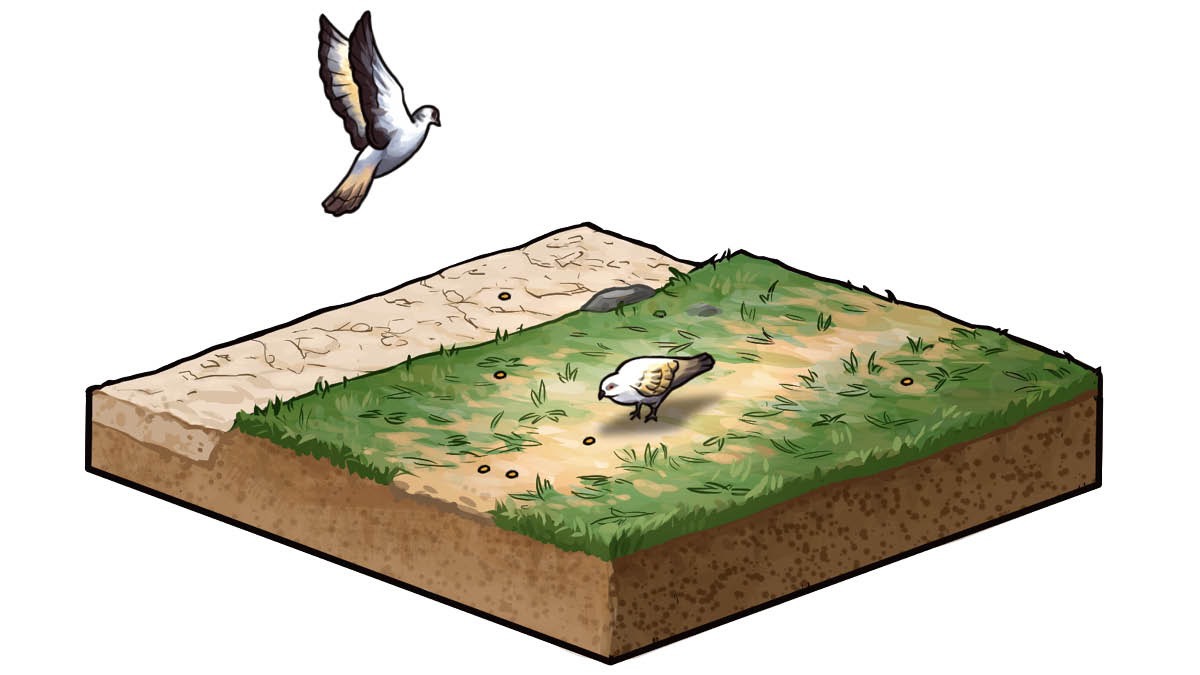
• Rocky soil: This person allows pressure or opposition from his peers or family to prevent him from obeying Jehovah and living by His standards.

• Soil with thorns: This person likes what he learns about Jehovah, but he feels that having money and possessions will make him feel happy and secure. He often misses his personal Bible study sessions because he is working or is engaging in some kind of recreation.

• Fine soil: This person regularly studies the Bible and tries to apply what he learns. His priority in life is that of pleasing Jehovah. Despite trials and opposition, he persists in telling others what he knows about Jehovah.

You control what is in your heart. Like the different types of soil in Jesus’ illustration, your symbolic heart can be softened, weeded, and improved. Remember, you choose the type of soil that you are.
THE MOST IMPORTANT LOVE
4. What is the primary motivation that will lead you to baptism?
4. You have many worthwhile things to love and appreciate. For instance, even before studying with Jehovah’s Witnesses, you may have formed a deep appreciation for the Bible. And you may have developed a love for Jesus. Now that you have come to know Jehovah’s Witnesses, you might love to associate with them. But loving those good things will not necessarily make you want to dedicate yourself to Jehovah and get baptized. The primary motivation that will lead you to baptism is love for Jehovah God himself. When you love Jehovah more than all else, you will not let anything or anyone prevent you from serving him. You could view love for Jehovah as both the gateway to baptism and the guardrail that helps you stay on the path of serving God.
5. What questions will we consider?
5. Jesus said that we must love Jehovah with our whole heart, soul, mind, and strength.
(Mark 12.30: and you must love Jehovah your God with your whole heart and with your whole soul and with your whole mind and with your whole strength.’)
How can you learn to love and respect Jehovah that deeply? Reflecting on Jehovah’s love for us moves us to love him in return.
(1 John 4.19: We love, because he first loved us.)
What other feelings and actions will naturally follow once you develop that most important love?
6. According to Romans 1:20, what is one way that you can learn about Jehovah?
6. Learn about Jehovah through his creation.
Read Romans 1.20: For his invisible qualities are clearly seen from the world’s creation onward, because they are perceived by the things made, even his eternal power and Godship, so that they are inexcusable.
Meditate on the wisdom evident in the designs of plants and animals. Learn a little about the wonderful way your body is made.
(Revelation 4.11: “You are worthy, Jehovah our God, to receive the glory and the honor and the power, because you created all things, and because of your will they came into existence and were created.”)
And think about the power that Jehovah packed into our sun, realizing that it is just one of billions of stars.
(Psalm 139.14: I praise you because in an awe-inspiring way I am wonderfully made. Your works are wonderful, I know this very well.)
(Isaiah 40.26: “Lift up your eyes to heaven and see. Who has created these things? It is the One who brings out their army by number; He calls them all by name. Because of his vast dynamic energy and his awe-inspiring power, Not one of them is missing.)
As you do, your respect for Jehovah will deepen. However, knowing that Jehovah is wise and powerful is only part of the foundation of your relationship with him. To build a strong love for Jehovah, you need to know more about him.
7. To love Jehovah deeply, of what do you need to be convinced?
7. You need to be convinced that Jehovah cares for you personally. Do you find it difficult to believe that the Creator of heaven and earth knows that you exist and that he cares for you? If so, remember that Jehovah is “not far off from each one of us.”
(Acts 17.26-28: And he made out of one man every nation of men to dwell on the entire surface of the earth, and he decreed the appointed times and the set limits of where men would dwell, so that they would seek God, if they might grope for him and really find him, although, in fact, he is not far off from each one of us. For by him we have life and move and exist, even as some of your own poets have said, ‘For we are also his children.’)
He “searches through all hearts,” and he promises you that, as David told Solomon, “if you search for him, he will let himself be found by you.”
(1 Chronicles 28.9: “And you, Solomon my son, know the God of your father and serve him with a complete heart and with a delightful soul, for Jehovah searches through all hearts, and he discerns every inclination of the thoughts. If you search for him, he will let himself be found by you, but if you leave him, he will reject you forever.)
In fact, the reason you are now studying the Bible is that, as Jehovah says, “I have drawn you to me.”
(Jeremiah 31.3: From far away Jehovah appeared to me and said: “I have loved you with an everlasting love. That is why I have drawn you to me with loyal love.)
The more you appreciate all that Jehovah has done for you, the deeper your love for him will be.
8. How can you respond to Jehovah’s love?
8. One way to respond to Jehovah’s love is by talking to him in prayer. Your love for God will grow as you tell him about your concerns and thank him for all that he does for you. And the bond between you and Jehovah will be strengthened as you see how he answers your prayers.
(Psalm 116.1: I love Jehovah Because he hears my voice, my pleas for help.)
You will become convinced that he understands you. But to grow close to Jehovah, you need to understand his way of thinking. And you need to know what he wants from you. The only way you will gain that knowledge is by studying his Word, the Bible.

CAPTION: The best way to be close to God and know what he wants from us is by studying the Bible (See paragraph 9)
9. How can you show that you appreciate the Bible?
9. Learn to appreciate God’s Word, the Bible. Only the Bible contains the truth about Jehovah and his purpose for you. You show that you appreciate the Bible by reading it each day, by preparing for your personal Bible study session, and by applying what you learn.
(Psalm 119.97: How I do love your law! I ponder over it all day long.)
(Psalm 119.99: I have more insight than all my teachers, Because I ponder over your reminders.)
(John 17.17: Sanctify them by means of the truth; your word is truth.)
Do you have a personal Bible reading schedule? Do you follow that schedule, making sure that you read the Bible each day?
10. What is one of the unique features of the Bible?
10. One of the unique features of the Bible is that it contains eyewitness accounts about Jesus. It is the only accurate record that explains what Jesus has done for you. As you learn what Jesus said and did, you will likely be moved to form a friendship with him.
11. How can you learn to love Jehovah?
11. Learn to love Jesus, and your love for Jehovah will grow. Why? Because Jesus reflects his Father’s qualities perfectly.
(John 14.9: Jesus said to him: “Even after I have been with you men for such a long time, Philip, have you not come to know me? Whoever has seen me has seen the Father also. How is it you say, ‘Show us the Father’?)
So the more you learn about Jesus, the better you will understand and appreciate Jehovah. Think of the compassion Jesus showed for those who were looked down on by others-the poor, the sick, and the vulnerable. Think, too, of the practical advice he gives you and how your life improves when you listen to him.-
(Matthew 5.1-11: When he saw the crowds, he went up on the mountain; and after he sat down, his disciples came to him. Then he opened his mouth and began teaching them, saying: “Happy are those conscious of their spiritual need, since the Kingdom of the heavens belongs to them. “Happy are those who mourn, since they will be comforted. “Happy are the mild-tempered, since they will inherit the earth. “Happy are those hungering and thirsting for righteousness, since they will be filled. “Happy are the merciful, since they will be shown mercy. “Happy are the pure in heart, since they will see God. “Happy are the peacemakers, since they will be called sons of God. “Happy are those who have been persecuted for righteousness’ sake, since the Kingdom of the heavens belongs to them. “Happy are you when people reproach you and persecute you and lyingly say every sort of wicked thing against you for my sake.)
(Matthew 7.24-27: “Therefore, everyone who hears these sayings of mine and does them will be like a discreet man who built his house on the rock. And the rain poured down and the floods came and the winds blew and lashed against that house, but it did not cave in, for it had been founded on the rock. Furthermore, everyone hearing these sayings of mine and not doing them will be like a foolish man who built his house on the sand. And the rain poured down and the floods came and the winds blew and struck against that house, and it caved in, and its collapse was great.”)
12. As you learn about Jesus, what may you be moved to do?
12. Your affection for Jesus is likely to become stronger as you think deeply about the sacrifice he made so that our sins can be forgiven.
(Matthew 20.28: Just as the Son of man came, not to be ministered to, but to minister and to give his life as a ransom in exchange for many.”)
When you understand that Jesus was willing to die for you, you may feel moved to repent and seek Jehovah’s forgiveness.
(Acts 3.19, 20: “Repent, therefore, and turn around so as to get your sins blotted out, so that seasons of refreshing may come from Jehovah himself and he may send the Christ appointed for you, Jesus.)
(1 John 1.9: If we confess our sins, he is faithful and righteous so as to forgive us our sins and to cleanse us from all unrighteousness.)
And as you come to love Jesus and Jehovah, you will naturally be drawn to others who feel the same way.
13. What has Jehovah provided for you?
13. Learn to love Jehovah’s family. Your unbelieving family and former friends may not understand why you want to dedicate yourself to Jehovah. They may even oppose you. Jehovah will help you by providing a spiritual family. If you stay close to that spiritual family, you will find the love and support you need.
(Mark 10.29, 30: Jesus said: “Truly I say to you, no one has left house or brothers or sisters or mother or father or children or fields for my sake and for the sake of the good news who will not get 100 times more now in this period of time—houses, brothers, sisters, mothers, children, and fields, with persecutions—and in the coming system of things, everlasting life.)
(Hebrews 10.24, 25: And let us consider one another so as to incite to love and fine works, not forsaking our meeting together, as some have the custom, but encouraging one another, and all the more so as you see the day drawing near.)
In time, your family members may join you in serving Jehovah and living by his standards.-
(1 Peter 2.12: Maintain your conduct fine among the nations, so that when they accuse you of being wrongdoers, they may be eyewitnesses of your fine works and, as a result, glorify God in the day of his inspection.)
14. As stated at 1 John 5:3, what have you discovered about Jehovah’s standards?
14. Learn to appreciate and apply Jehovah’s standards. Before coming to know Jehovah, you may have set your own standards, but now you see that Jehovah’s standards are better.
(Psalm 1.1-3: Happy is the man who does not walk according to the advice of the wicked And does not stand on the path of sinners And does not sit in the seat of scoffers. But his delight is in the law of Jehovah, And he reads His law in an undertone day and night. He will be like a tree planted by streams of water, A tree that produces fruit in its season, The foliage of which does not wither. And everything he does will succeed.)
Read 1 John 5.3: For this is what the love of God means, that we observe his commandments; and yet his commandments are not burdensome,
Think about the Bible’s counsel for husbands, wives, parents, and children.
(Ephesians 5.22-6:4: Let wives be in subjection to their husbands as to the Lord, because a husband is head of his wife just as the Christ is head of the congregation, he being a savior of this body. In fact, as the congregation is in subjection to the Christ, wives should also be to their husbands in everything. Husbands, continue loving your wives, just as the Christ also loved the congregation and gave himself up for it, in order that he might sanctify it, cleansing it with the bath of water by means of the word, so that he might present the congregation to himself in its splendor, without a spot or a wrinkle or any of such things, but holy and without blemish. In the same way husbands should love their wives as their own bodies. A man who loves his wife loves himself, for no man ever hated his own body, but he feeds and cherishes it, just as the Christ does the congregation, because we are members of his body. “For this reason a man will leave his father and his mother and he will stick to his wife, and the two will be one flesh.” This sacred secret is great. Now I am speaking about Christ and the congregation. Nevertheless, each one of you must love his wife as he does himself; on the other hand, the wife should have deep respect for her husband. Children, be obedient to your parents in union with the Lord, for this is righteous. “Honor your father and your mother” is the first command with a promise: “That it may go well with you and you may remain a long time on the earth.” And fathers, do not be irritating your children, but go on bringing them up in the discipline and admonition of Jehovah.)
As you apply that counsel, have you seen your family life improve? As you obey Jehovah’s directions about choosing your friends wisely, have your personal habits improved? Are you a happier person?
(Proverbs 13.20: The one walking with the wise will become wise, But the one who has dealings with the stupid will fare badly.)
(1 Corinthians 15.33: Do not be misled. Bad associations spoil useful habits.)
Likely the answer to those questions is yes.
15. What can you do if you need help in applying Bible principles?
15. At times, you may find it difficult to know how to apply the Bible principles you are learning. That is why Jehovah uses his organization to provide you with Bible-based material that can help you to discern right from wrong.
(Hebrews 5.13, 14: For everyone who continues to feed on milk is unacquainted with the word of righteousness, for he is a young child. But solid food belongs to mature people, to those who through use have their powers of discernment trained to distinguish both right and wrong.)
When you read and study this material, you will see how practical and specific it is, and you will likely be drawn to Jehovah’s organization.
16. How has Jehovah organized his people?
16. Learn to love and support Jehovah’s organization. Jehovah has organized his people into congregations; his Son, Jesus, is the head over them all.
(Ephesians 1.22: He also subjected all things under his feet and made him head over all things with regard to the congregation,)
(Ephesians 5.23: because a husband is head of his wife just as the Christ is head of the congregation, he being a savior of this body.)
Jesus has appointed a small group of anointed men to take the lead in organizing the work that he wants done today. Jesus referred to this group of men as “the faithful and discreet slave,” and they take seriously their responsibility to feed and protect you spiritually.
(Matthew 24.45-47: “Who really is the faithful and discreet slave whom his master appointed over his domestics, to give them their food at the proper time? Happy is that slave if his master on coming finds him doing so! Truly I say to you, he will appoint him over all his belongings.)
One of the ways the faithful slave helps to care for you is by ensuring that qualified elders are appointed to shepherd you.
(Isaiah 32.1, 2: Look! A king will reign for righteousness, And princes will rule for justice. And each one will be like a hiding place from the wind, A place of concealment from the rainstorm, Like streams of water in a waterless land, Like the shadow of a massive crag in a parched land.)
(Hebrews 13.17: Be obedient to those who are taking the lead among you and be submissive, for they are keeping watch over you as those who will render an account, so that they may do this with joy and not with sighing, for this would be damaging to you.)
(1 Peter 5.2, 3: Shepherd the flock of God under your care, serving as overseers, not under compulsion, but willingly before God; not for love of dishonest gain, but eagerly; not lording it over those who are God’s inheritance, but becoming examples to the flock.)
The elders are willing to pour themselves out for you, to comfort you, and to help you grow ever closer to Jehovah. But one of the most important things they can do for you is help you teach others about Jehovah.-
(Ephesians 4.11-13: And he gave some as apostles, some as prophets, some as evangelizers, some as shepherds and teachers, with a view to the readjustment of the holy ones, for ministerial work, to build up the body of the Christ, until we all attain to the oneness of the faith and of the accurate knowledge of the Son of God, to being a full-grown man, attaining the measure of stature that belongs to the fullness of the Christ.)
17. According to Romans 10:10, 13, 14, why do we talk to others about Jehovah?
17. Help others learn to love Jehovah. Jesus told his followers to teach others about Jehovah.
(Matthew 28.19, 20: Go, therefore, and make disciples of people of all the nations, baptizing them in the name of the Father and of the Son and of the holy spirit, teaching them to observe all the things I have commanded you. And look! I am with you all the days until the conclusion of the system of things.”)
It is possible to obey that command out of a sense of duty. But as your love for Jehovah grows, you will feel the same way as did the apostles Peter and John, who said: “We cannot stop speaking about the things we have seen and heard.”
(Acts 4.20: But as for us, we cannot stop speaking about the things we have seen and heard.”)
Few things bring as much happiness as helping someone come to love Jehovah. Imagine how much joy the evangelizer Philip felt when he helped the Ethiopian learn the truth contained in the Scriptures and get baptized! When you imitate Philip and obey Jesus’ command to preach, you prove that you want to be one of Jehovah’s Witnesses.
Read Romans 10.10: For with the heart one exercises faith for righteousness, but with the mouth one makes public declaration for salvation.
Read Romans 10.13, 14: For “everyone who calls on the name of Jehovah will be saved.” However, how will they call on him if they have not put faith in him? How, in turn, will they put faith in him about whom they have not heard? How, in turn, will they hear without someone to preach?”
At that point, you will likely ask the same question as the Ethiopian did: “What prevents me from getting baptized?”
(Acts 8.36: Now as they were going along the road, they came to a body of water, and the eunuch said: “Look! Here is water; what prevents me from getting baptized?”)
18. What will we consider in the next article?
18. You will take the most important step of your life when you decide to get baptized. Because it is such a serious step, you need to consider carefully what is involved. What do you need to know about baptism? What do you need to do before and after baptism? Those questions will be answered in the next article.
HOW WOULD YOU ANSWER?
• What should be our primary motive for serving Jehovah, and why do you answer that way?
• How can we learn to love Jehovah?
• How can we benefit from meditating on the illustration found at ?
(Luke 8.11-15: Now the illustration means this: The seed is the word of God. Those alongside the road are the ones who have heard, and then the Devil comes and takes the word away from their hearts so that they may not believe and be saved. Those on the rock are the ones who, when they hear the word, receive it with joy, but these have no root. They believe for a while, but in a season of testing, they fall away. As for that which fell among the thorns, these are the ones who have heard, but by being carried away by anxieties, riches, and pleasures of this life, they are completely choked and bring nothing to maturity. As for that on the fine soil, these are the ones who, after hearing the word with a fine and good heart, retain it and bear fruit with endurance.)
SONG 2 Jehovah Is Your Name
[End of article.]